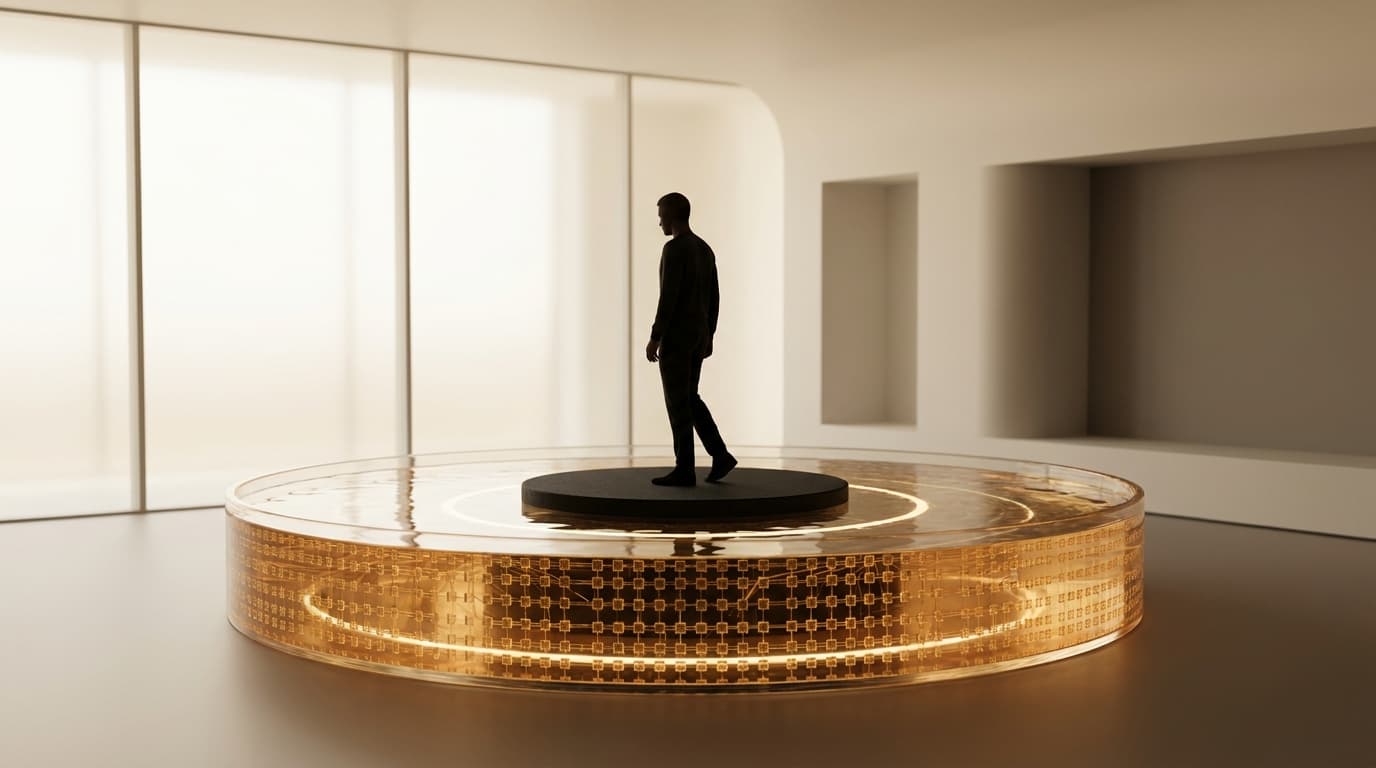
On June 17, 2026, Midjourney, the company famous for generating images from text, announced something nobody predicted: a medical division and a whole-body ultrasound scanner. The pitch is staggering. Step onto a platform, descend slowly into water, pass through a ring of half a million microscopic sensors, and walk out 60 seconds later with a 3D map of your insides. The promise on Midjourney's own blog: "with enough early imaging in the future, the world could avoid 30 percent of all deaths and 50 percent of all healthcare costs."
An image-generation startup, with no hardware history and no medical track record, making one of the boldest health claims in tech. That deserves scrutiny, not a hot take. So we did the work: we cross-checked every figure against primary sources, the SEC filings, peer-reviewed ultrasound physics, the FDA, and the company's own numbers. The short version: the partnership behind it is real and already generating revenue, the engineering is serious, and the headline claims range from aspirational to physically impossible. Here is the line between them.
What Midjourney actually announced
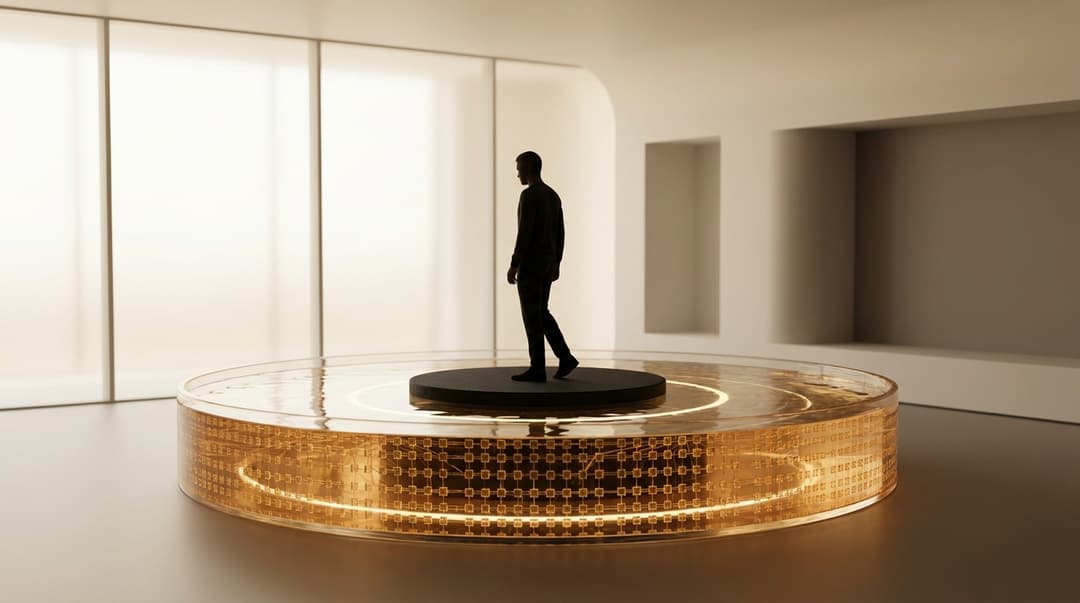
The product is the "Midjourney Scanner", housed in a future "Midjourney Spa" in San Francisco (Union Square), planned for the end of 2027 with around ten scan cabins alongside a gym and cold plunges. The technology is ultrasound computed tomography (USCT): you are immersed in water for acoustic coupling, a ring of sensors fires ultrasound and records the echoes millions of times per second, and software reconstructs a 3D body map. No radiation, no strong magnetic field. The roadmap, in Midjourney's own words, is anything but modest.
| Milestone | Target (Midjourney's stated plan) |
|---|---|
| Gen-1 prototype | Working now, shown at announcement |
| Gen-2 hardware | Within ~12 months (by end of 2026) |
| Gen-3, fully custom in-house silicon | 2028 |
| Midjourney Spa, San Francisco | End of 2027, ~10 scan cabins |
| Global fleet | 50,000+ scanners by 2031 |
| Capacity | "Up to 1 billion scans per month" |
| Upfront capex (Holz estimate) | ~$20 billion to scale to thousands of spas |
| Cost per scan | "Hundreds or thousands of times cheaper than MRI" |
Founder David Holz openly called the project "a little weird and a little crazy." The framing matters: at launch the device makes body-composition maps only, with no diagnostic claims and no FDA clearance. That is not a footnote. It is the whole legal foundation of the spa model, and we come back to it.
The headline claims vs the verified machine
This is where a striking announcement meets the data. The numbers that went viral are not the numbers Midjourney's actual prototype delivers. Here is the side-by-side, with the verified figures drawn from the engineering coverage that traces back to Midjourney's own briefing.
| Claim that went viral | What the Gen-1 prototype actually does (verified) |
|---|---|
| ~500,000 sensor elements | 358,000 elements (40 Butterfly modules x 8,960 transducers) |
| Precision to 1/1000 mm (1 micron) | ~0.5 mm resolution (on par with a clinical MRI) |
| Full body in 60 seconds | ~20 minutes per scan today (60 s is a future target) |
| "Better than a traditional MRI" | Comparable resolution, on a much narrower, unproven use |
| "500 hours of HD video per second" of data | ~40 GB per body slice, ~17 GB/s capture, ~2 petaflops to process |
Read that table twice. The real machine is impressive on its own terms: 358,000 elements in a 70 cm ring, half-millimeter resolution, radiation-free. But the figures that made the announcement go viral, the 1-micron precision and the 60-second whole-body scan, are not what the prototype produces. One of them, as we will see, is not even physically possible.
The partnership is real, and already paying
Here is the part that separates this from vaporware. The scanner is built on a real, SEC-disclosed partnership with Butterfly Network (NYSE: BFLY), the "ultrasound-on-chip" company. The numbers are not Midjourney marketing, they are in regulatory filings:
- A co-development and licensing deal worth up to $74 million over five years ($15M upfront, $10M/year, up to $9M milestones, plus revenue share), disclosed in a Form 8-K filed November 17, 2025.
- Each scanner uses 40 Butterfly Ultrasound-on-Chip modules, confirmed by Butterfly's own June 18, 2026 investor statement.
- The deal was already generating revenue before the public reveal: Butterfly's Q1 2026 results (quarter ended March 31) reported Embedded revenue of $5.7M, up 147% year over year, "primarily driven by the Midjourney partnership", roughly seven weeks before anyone outside saw the scanner.
So the engineering is grounded in a public-company supply relationship with real money moving through it. Whatever you make of the vision, the hardware is not a render. That is the strongest fact in the whole story, and it is exactly why the inflated claims around it deserve more scrutiny, not less.
The physics problem: 1 micron is impossible
The most repeated figure, precision "to a thousandth of a millimeter", collides with physics. Ultrasound resolution is diffraction-limited: you cannot resolve detail much finer than the wavelength of the sound you are using. At medical ultrasound frequencies, that ceiling is in the hundreds of micrometers, not one micrometer. The best research-grade ultrasound tomography in the world, QT Ultrasound's full-wave 3D systems, reaches about 0.6 mm, not 0.001 mm. Midjourney's own prototype quotes ~0.5 mm, which is consistent with physics. The viral "1 micron" figure overshoots the physical limit by roughly 1000 times. It is best read as marketing or a translation artifact, not a spec.
There is a second, deeper gap. Clinical USCT exists today for exactly one thing: breast imaging. The FDA-cleared Delphinus SoftVue (2021) and QT Imaging's systems use rings of about 2,048 elements to image a breast, which is small, water-immersible and acoustically friendly, with no bone, lung or gas in the way. Whole-body USCT has never been clinically demonstrated. The leap from a proven breast scanner to a proven whole-body scanner is not incremental, it is two orders of magnitude in sensor count and an entirely harder physics problem.
Sensor elements: proven clinical USCT vs Midjourney's claim
Clinically proven USCT today images only the breast with ~2,048 elements. Whole-body USCT is unproven. Sources: PMC5516530, Butterfly Network IR, latent.space.
The Midjourney Spa, and the regulatory sidestep

The scanner is not arriving in a hospital. It is arriving in a spa, wrapped in warm golden light, next to cold plunges and a gym. That aesthetic choice is also a regulatory one. By producing "body-composition maps" and making no diagnostic claims, Midjourney can position the device as wellness rather than medicine, which sidesteps the long, expensive FDA clearance path that a diagnostic device requires. It is a clever framing. It also means that, at launch, the machine is explicitly not allowed to tell you that you are sick, which sits awkwardly next to a promise to cut deaths by 30 percent.
The 30% claim, against the medical evidence
This is the heart of it. Does scanning healthy people actually save lives at scale? The medical consensus is, to put it mildly, not on Midjourney's side. The FDA, the US Preventive Services Task Force, the American College of Radiology and the American Medical Association all decline to recommend whole-body screening of people without symptoms. The reason is overdiagnosis: scan enough healthy bodies and you will find countless harmless anomalies (incidentalomas), each triggering anxiety, more tests, biopsies and treatments that carry their own real risks. Abnormal findings are often insignificant; normal findings are sometimes wrong. The "cascade" can harm more people than it helps.
One fair point in Midjourney's favor: the FDA's strongest warnings target CT scans, whose ionizing radiation is itself harmful. Ultrasound has no radiation, so that specific objection does not apply. But the deeper criticism, overdiagnosis and false positives, is modality-independent. It applies just as much to ultrasound and MRI as to CT. Midjourney is not the first to bet that this time is different. A whole wave of well-funded startups is making the same bet.
| Player | Approach | Notable |
|---|---|---|
| Midjourney Scanner | Whole-body ultrasound (USCT), spa model | No FDA clearance, body-composition maps only at launch |
| Neko Health (Daniel Ek, Spotify) | Multi-sensor full-body scan | $260M raised at a $1.8B valuation (Jan 2025) |
| Prenuvo | Whole-body MRI screening | Paid, reported around $2,000-2,500 per scan |
| Ezra | Whole-body / targeted MRI | Paid, reported from around $1,350 |
Competitor prices are as commonly reported, not independently verified here. Neko Health's raise and valuation are from TechCrunch (Jan 2025).
Who is Midjourney to make this claim?
Some context on the company sharpens the picture. Midjourney was founded in 2022 by David Holz (previously of Leap Motion), is famously bootstrapped with no external investors, funded by its user community, and reportedly past $200M in revenue. It shipped its v8.1 image model in June 2026, days before this announcement. The hardware effort is led by Ahmad Abbas, who worked on Apple's Vision Pro.
And there is an irony worth naming. On June 11, 2025, Disney and NBCUniversal (with Marvel, Lucasfilm, DreamWorks and others) filed a copyright-infringement lawsuit against Midjourney (Disney Enterprises Inc. v. Midjourney Inc., 2:25-cv-05275, Central District of California). A company being sued over how it trained on other people's images is now asking the public to trust it with images of the inside of their bodies. The vision is genuinely exciting. The track record invites caution.
Our take: how to read an announcement like this
What follows is our analysis.
Midjourney is, above all, a company that is exceptional at one thing: producing a compelling image. This announcement is a masterclass in exactly that skill, applied to a narrative. The trap, for a business or an investor watching from the outside, is to react to the image instead of the evidence. The discipline is to sort any big technology claim into three buckets:
- Verified and solid. The Butterfly partnership ($74M, SEC-filed, revenue already booked), the radiation-free engineering, the 358,000-element prototype at ~0.5 mm. This is real.
- Aspirational, unproven. The 2027 spa, 50,000 scanners by 2031, a billion scans a month, "hundreds of times cheaper than MRI." Targets, not results. Maybe, eventually.
- Implausible or unsupported. The 1-micron precision (beyond physics), the 60-second whole-body scan (today it is 20 minutes), and "30% fewer deaths" (against the entire weight of screening evidence). Treat as marketing until proven.
That sorting exercise is not cynicism, it is literacy. In an era where the most advanced AI companies are also the most advanced storytellers, the ability to separate a verified fact from a beautiful projection is a core business skill. It is the same discipline we bring when we help clients communicate their own technology honestly, and evaluate the tools and partners they are sold (see our work). If you want a clear-eyed read on an AI claim, a product, or a vendor before you commit budget to it, tell us about your project (or contact us) and we will come back within 48 hours. For more on the AI hype cycle, see our pieces on SpaceX buying Cursor and the government suspension of Fable 5.
Timeline (as of June 2026)
This is a developing story; every scanner spec is a first-party claim with no independent validation, no peer review and no FDA clearance.
- 2022 Midjourney founded by David Holz, bootstrapped, no outside investors.
- June 11, 2025 Disney and NBCUniversal sue Midjourney for copyright infringement.
- November 17, 2025 Butterfly Network discloses the co-development deal (up to $74M over 5 years) in an SEC Form 8-K.
- Q1 2026 Butterfly books $5.7M Embedded revenue (+147% YoY), "primarily driven by the Midjourney partnership."
- June 2026 Midjourney ships its v8.1 image model.
- June 16-17, 2026 Midjourney Medical and the Midjourney Scanner are unveiled.
- End of 2027 Planned Midjourney Spa in San Francisco (~10 cabins).
- 2028 to 2031 Custom silicon (2028), then a planned fleet of 50,000+ scanners and a billion scans a month (2031).